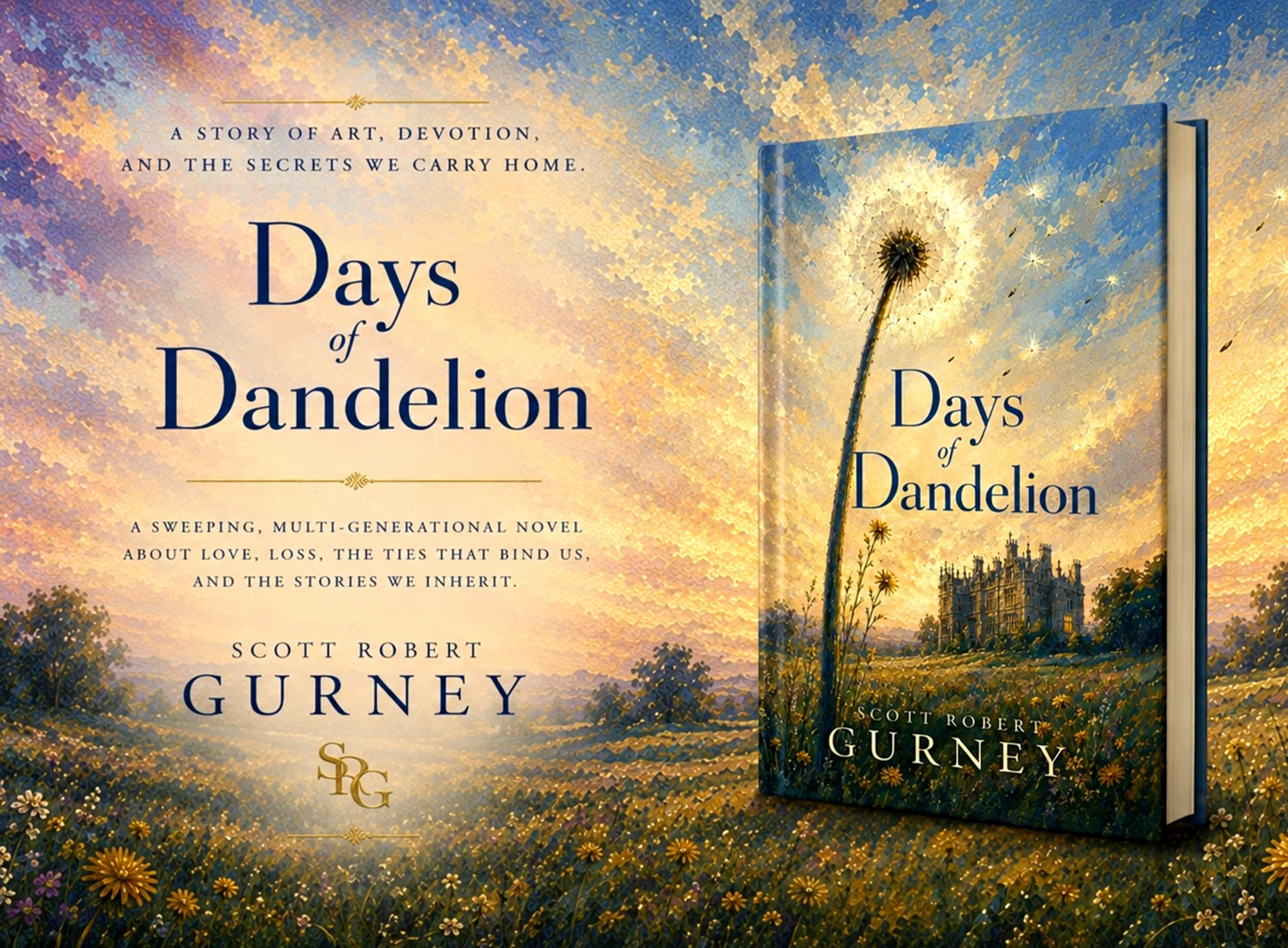
Days of Dandelion
✳︎
Scott Robert Gurney
✳︎
Debut Literary Novel
✳︎
A Story Of Art, Devotion, And The Secrets We Carry Home
✳︎
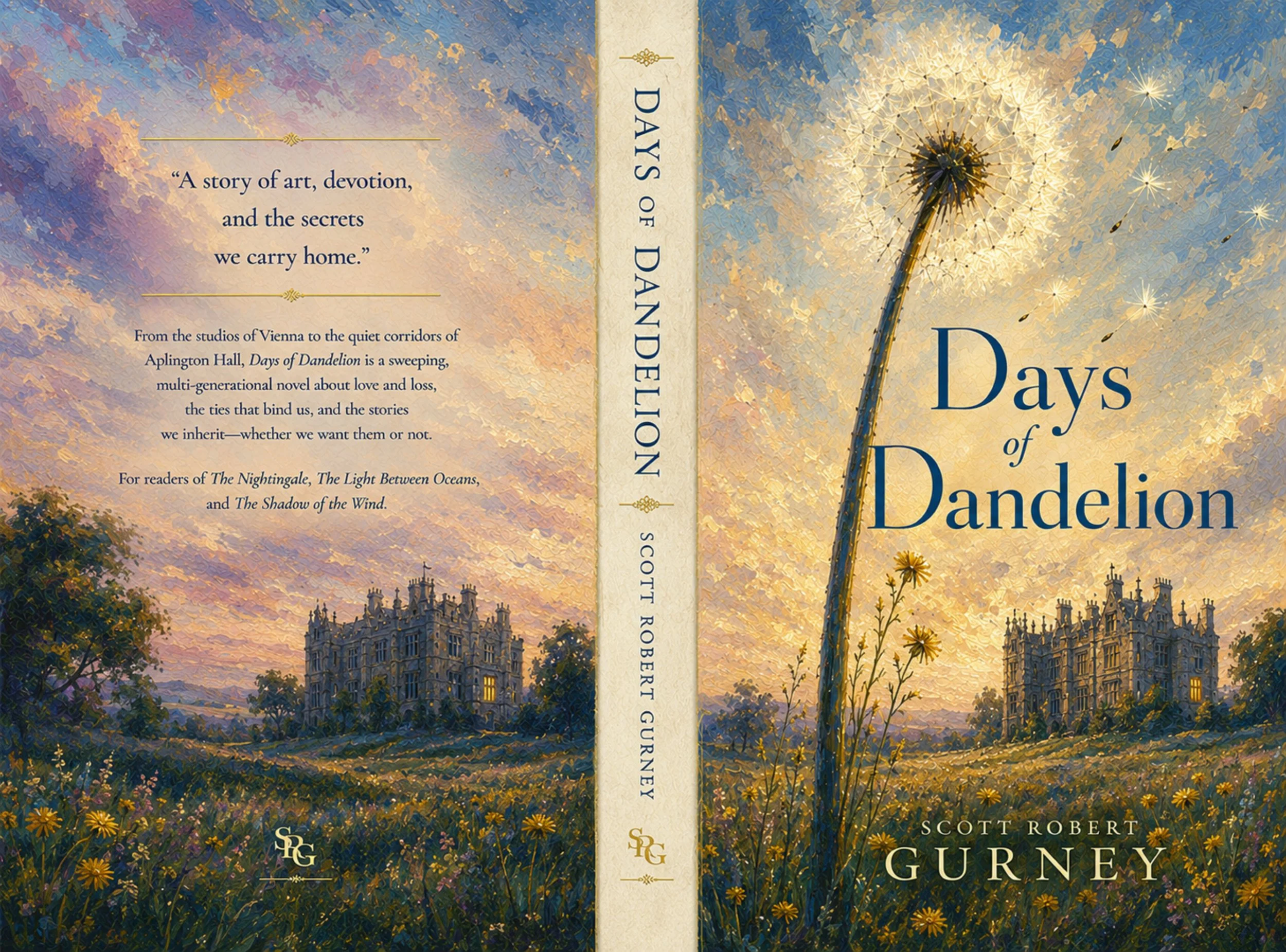
Available 8 October 2026
✳︎
Silver Siberian Press
✳︎
Days of Dandelion ✳︎ Scott Robert Gurney ✳︎ Debut Literary Novel ✳︎ A Story Of Art, Devotion, And The Secrets We Carry Home ✳︎ Available 8 October 2026 ✳︎ Silver Siberian Press ✳︎
Days of Dandelion,
Scott Robert Gurney.
Some inherit wealth. Others inherit memory.
Catherine's search for artistic truth leads her from ateliers of Vienna to the fading grandeur of Aplington hall, where every room, every painting, and every whispered story reveals another fragment of a family's hidden inheritance.
As she remembers the lives that shaped the house before her, Catherine is forced to confront the quiet legacies that define us all: love, loss, devotion and the search for belonging.
Days of Dandelion is an atmospheric literary novel exploring memory, identity and the enduring power of beauty. Richly imagined and deeply reflective, it is a story about the conversations that continue long after voices have fallen silent, an the fragile hope that survives the passing generations.

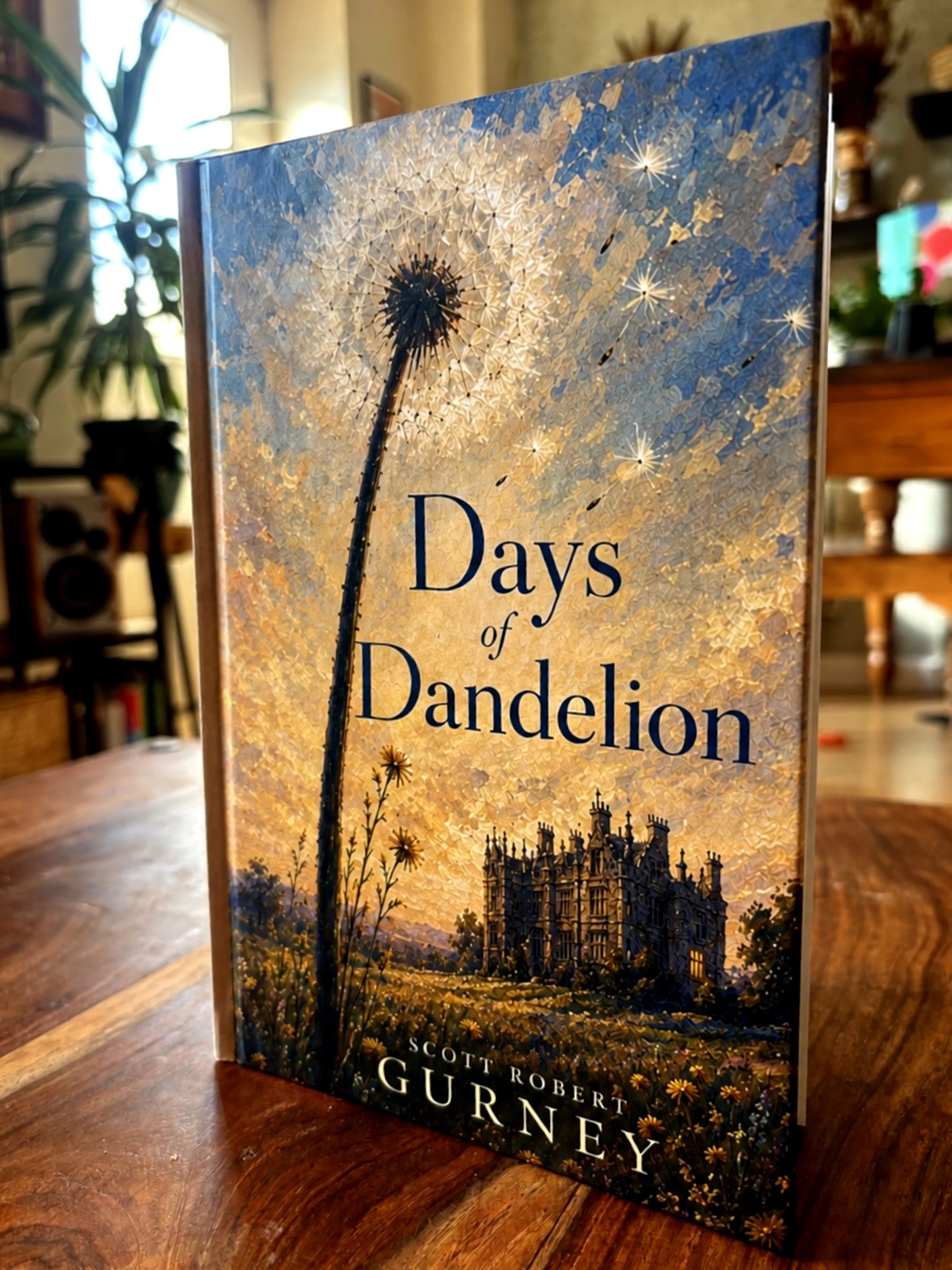
Reviews
'A compelling and timeless story - one that resonates with anyone who has ever felt like an outsider in their own life, yet clings to the hope that creation might bring clarity, connection, and peace.'
— M, Vidal'Gurney takes us on a moving exploration of loss, self-worth, and the role of art in finding meaning in life.'
— C, Port'Beautifully written and quietly profound, Days of Dandelion unfolds through memory into a deeply affecting exploration of loss, trauma, resilience and the quiet act of self-liberation; of finally coming home to oneself.'
— C, Hamilton'A cautionary tale in the search for happiness.'
— M, Hendry

About The Author
Scott Robert Gurney is a British novelist whose work explores memory, art, family and the enduring relationship between people and place. Influenced by historical landscapes, architecture and painting, his fictions combines literary prose with richly atmospheric settings. His debut novel, Days of Dandelion, is a story of devotion, creativity and the lives we inherit, inviting readers into a world where beauty and loss exist side by side.
I write stories where place is as important as character. I am drawn to the landscapes, houses and citties that shape the people who inhabit them. My novels explore the idea that memory can linger in architecture just as deeply as it does in the heart.
My work explores the quiet moments that define our lives. Rather than focusing on spectacle, I’m interested in the moments of reflection, grief, devotion and hope that quietly alter the course of a person’s life. I believe these are the moments readers remember long after the final page.
I write literary fiction that invites readers to slow down. My novels are written to be experienced rather than rushed. I hope readers will lose themselves in atmosphere, language and character, discovering meaning through emotion as much as plot.
I believe that stories connect us across generations. Many of my characters carry the weight of inherited memories, family histories and unspoken truths. I write about the ways we are shaped by those who came before us, and how understanding the past can illuminate the present.
Art and history are at the heart of my storytelling. I have a fascination with art, architecture and forgotten histories. These influences shape the writing decision I make, grounding lives within real places, artistic traditions and historical moments.
Discovering Catherine Maude Nichols
Every novel begins somewhere unexpected.
For Days of Dandelion, it began not with a character or a plot, but with a university assignment.
While studying at the University of Hull, I was asked to begin developing an original idea for a novel. Looking for inspiration, I visited my local library (Norwich & Norfolk Millennium), hoping that something on its shelves might spark the beginning of a story.
Two books caught my attention.
One was titled: Dandelion Days.
The other explored Europes most overlooked artists. If I remember correctly, it was called: The most famous unknown artists in Europe.
I was immediately struck by the dichotomy between fame and anonymity, And Catherine Maude Nichols, quiet, but knowing portrait. Then I found her artworks and saw something familiar in them - quietness, depth and reflection. They seemed to capture not only architecture, landscape or light - but a feeling.
Then as I read through the research on her life, I discovered something that surprised me even more than her work.
Despite exhibiting at the Royal Academy and becoming one of the first elected to the Royal Soceiety of Painter-Etchers, very little is known about her today. She had lived a short distance from the apartment where I was living at the time, yet I had never heard her name.
That sense of quiet disappearance stayed with me.
And the more I searched, the more I realised that so much of her life remained unknown. Some accounts praised her discreet personal life and applauded her vision, others questioned her outspoken attitudes on art and her distinct impressions of the world. Yet rather than discouraging me with a lack of truth, those unanswered questions became part of the inspiration for Days of Dandelion.
The novel, in its truest sense, is not about Catherine Maude Nichols, nor is it intended to tell her story in verbatim truth. Instead, her life, her work, and her refusal to disappear in her time and mine became the emotional touchstone while I wrote - a reminder that beauty can survive long after the people who create it have faded from public memory.
In many ways, Days of Dandelion grew from that discovery: a chance encounter in a library, a forgotten artist from my own part of the world, and the quiet belief that some stories deserve to be remembered.
*****
I wrote the first draft of the Novel from September to December in 2024. Then spent the next two years, slowly refining and letting the work inform my revisions. The entire time I felt guided by Catherine. When I was exploring other aspects of my life, I found whispers of her presence through Norwich.
At a friends birthday in November 2025 - we went the Queen Iceni on the Norwich river, just a way down from her Norwich river painting. It was packed and we sat in the corner of this building on the only available chair. Then, as the discussions continued around us, I saw her staring back at me. In the small corner of the room, a small, perhaps dignified biography of her importance in the Art world, of her time.
After that I noticed more and more of her and her families presence in Norwich. Unthank Road, where I lived, had been named after her uncle (General Unthank) who was involved in the organisation, perhaps founding of the NR2 golden triangle. Catherine was buried in Eaton park, a few streets away from my apartment.
It’s an odd feeling, as a writer, to get to this point. Because the one questions that I still wonder is, did I find Catherine, or did Catherine find me. Regardless, I do believe that her memory, or presence or history saved me. It helped me to process my own life, attitudes, rejections from the artistic industry.
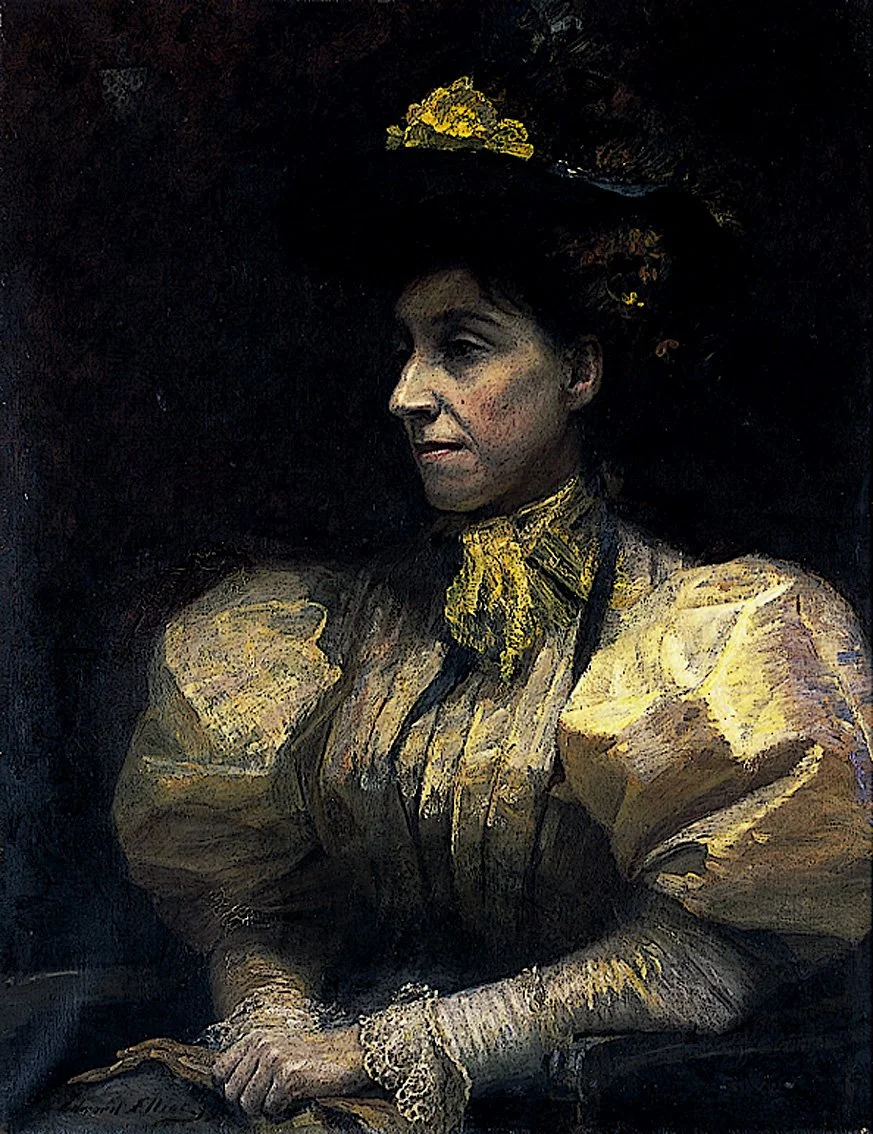
Catherine Maude Nichols
Before there was a novel, there was an artist whose work had almost disappeared from public memory.
‘Some artists leave behind celebrated names. Others leave behind extraordinary work waiting to be rediscovered.’
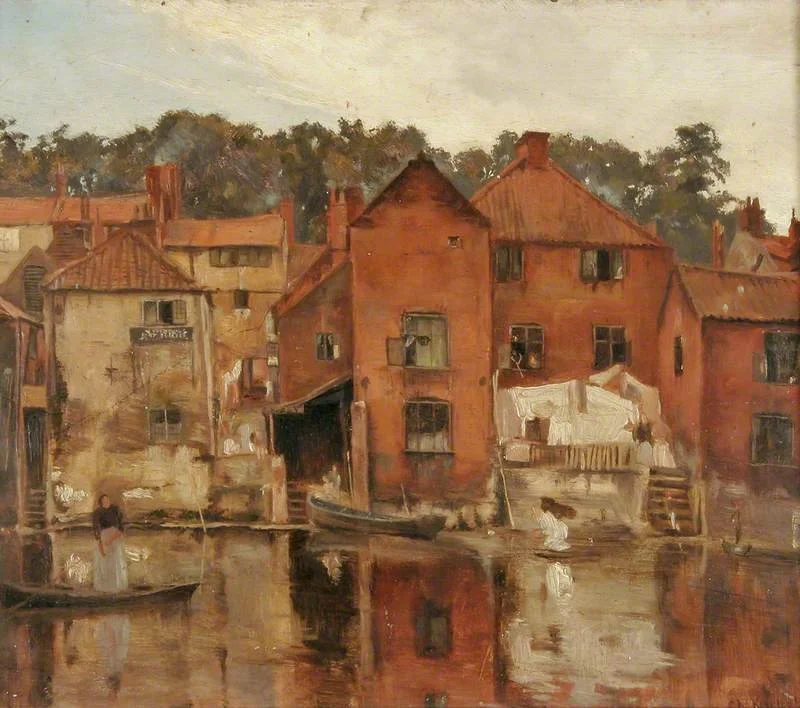
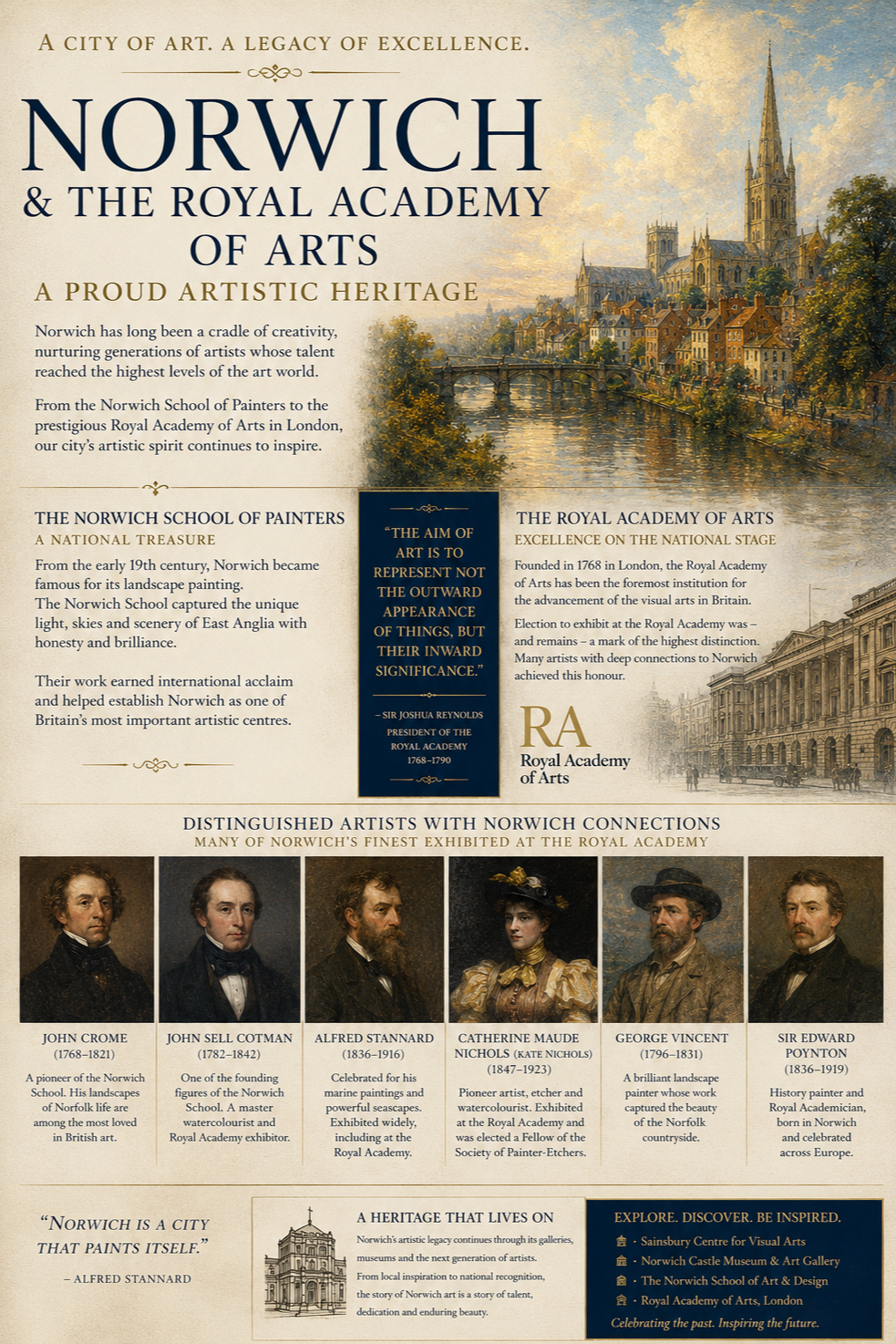
Days of Dandelion owes much of its visual identity to the work of Catherine Maude Nichols (1847 - 1923), a Norwich born painter and printmaker whose atmospheric depictions of Norfolk’s landscapes, waterways and historic streets became an important source of inspiration while writing the novel.
Although little is known about many aspects of her personal life, her work speaks with remarkable clarity. Her paintings capture the quiet beauty of Norfolk. Not through grand spectacle, but through careful observation of light, architecture, belonging and the emotional pull of the piece.
A life Devoted to Art
Born in Norwich in 1847, Catherine Maude Nichols studied at the Norwich School of Art and went on to exhibit at the Royal Academy. She become one of the earliest women elected as a fellow of the Royal Society of Painter-Etchers, a significant achievement at a time when professional opportunities for women artists were limited. She produced more than 200 etchings and exhibited widely while remaining deeply connected to Norfolk throughout her life.
The Norfolk she painted
One of the reasons Nichols’ work resonates strongly with me is her ability to find beauty in ordinary places.
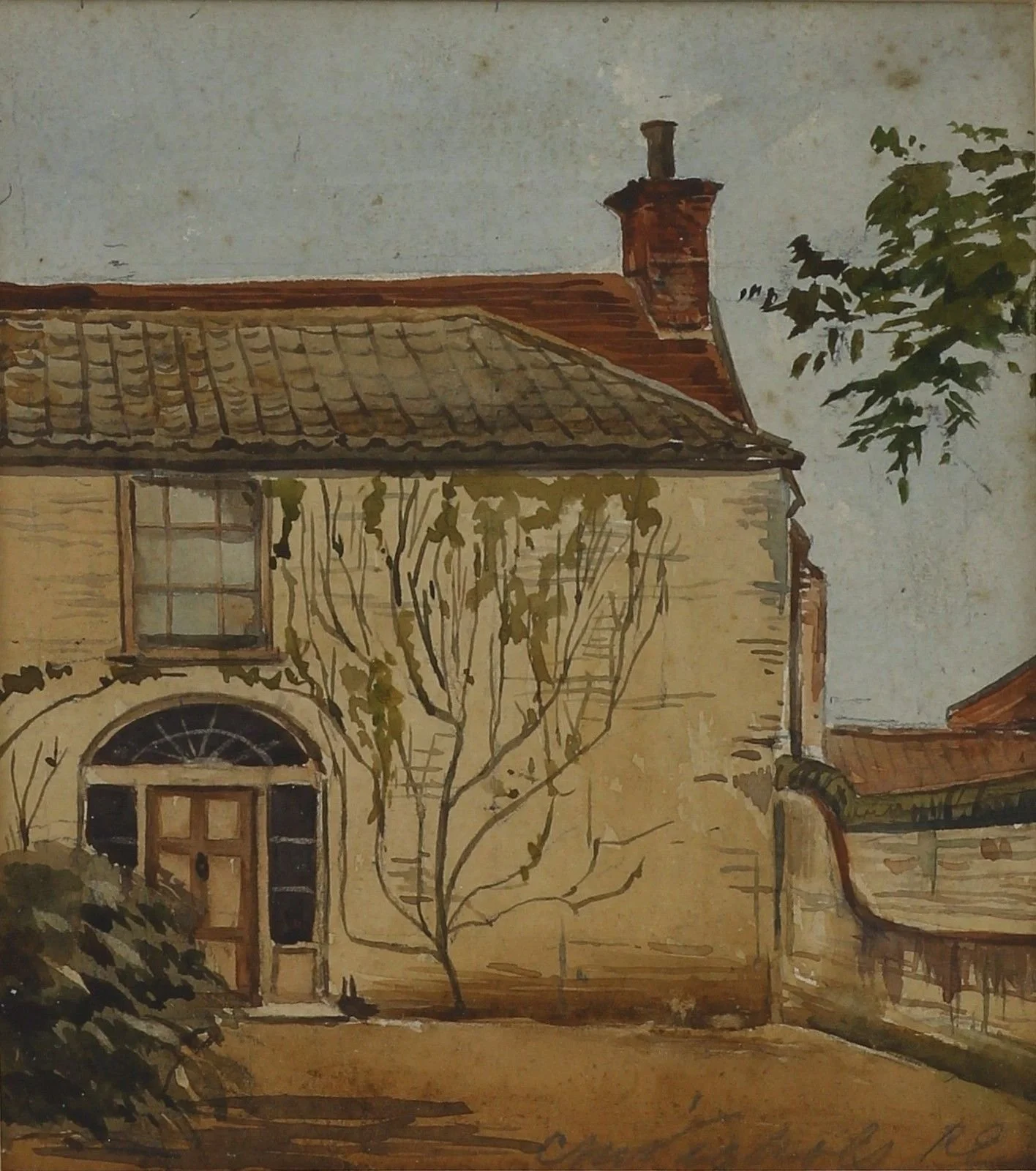
Rather than painting dramatic historical scenes, she turned her attention to quiet streets old buildings, rivers, marshes and villages. These familiar landscapes become places of atmosphere and reflection, inviting the viewer to slow down and look more closely. That sensibility influenced the emotional landscape of Days of Dandelion just as much as its physical setting.
Why Catherine Maude Nichols Matters
When researching the novel, I found myself repeatedly returning to Nichols paintings. Not because they illustrated the story directly, but because they captured something more elusive… The feeling of Norfolk. Her work helped shape my understanding of how place can become a character in it’s own right. Many novel’s descriptions of landscape, architecture and changing light were written with her paintings close at hand.
A Rediscovery
Although Nichols enjoyed success during her lifetime, she never achieved the lasting recognition afforded to many of her contemporaries. Recent exhibitions have begun to reintroduce her work to new audiences, highlighting not only her skill as a painter and printmaker but also her significant as a professional woman artist working in the late Nineteenth and early Twentieth century.
If Days of Dandelion encourages even a few readers to seek out her work, then I feel the novel has achieved something beyond its own pages.
Book Launch
The Authors Journal
-
![]()
Why write Days of Dandelion?
Inspirations, Aspirations, and Me.
-
![Norwich and the Royal Academy of Arts]()
The Historical Importance of Norwich
Norwich through the eyes of Art History
-
![]()
The Role of Art in Storytelling
The Conversation
Join my Mailing List
Ready to receive updates on my future projects, book talks, etc. Sign up below!